
Mount Vernon Previous Residents by Era
Start with the parcel. Move backward through land records, county indexes, directories, census schedules, newspapers, and maps. A deed tracks a transfer; directories and census schedules add address and household facts.
| Source | Documented time reach | Where it is held | What it can show |
|---|---|---|---|
| Mount Vernon assessment roll and county GIS | Current online roll and current parcel layer | City Assessor and Westchester GIS | Parcel key, property location, class, owner field, and map geometry. |
| Westchester Records Online | Eighteenth-century deeds through recent judgments, with access limits by record | Westchester County Clerk | Land filings, grantors, grantees, mortgages, maps, and related instruments. |
| Archives deed and mortgage indexes | Grantor/grantee 1680-1907; mortgagor 1680-1897 | Westchester County Archives | Older index leads, citations, and research or copy routes. |
| Mount Vernon directories and newspapers | Directory holdings from 1885 through 1937 with gaps; newspaper runs vary | Library local-history room and State Library leads | Printed address associations, notices, obituaries, and name variants. |
| Federal census and 1918 Sanborn maps | Historical schedules subject to the 72-year rule; map dated 1918 | Census repositories and Library of Congress | Household snapshot or physical block context for a selected date. |
Start in the era nearest the question, not at the oldest source. A recent ownership question calls for the parcel and land-record route. A family-history question about a house in an earlier period may need the directories, census, local newspapers, and Archives indexes before a modern portal can help.
Mount Vernon Parcels Start a Past-Resident Trail
The Mount Vernon Assessment roll is the starting point for a present address because it connects the property location to a tax-map parcel. The roll can identify a parcel ID, owner field, property class, assessed value, exemptions, school district, and other tax fields. The 2025 row format should not be called a complete parcel card. It does not show a building sketch or every historical transaction.
Use the county's Mount Vernon parcel layer to verify the displayed address, ZIP, street fields, `SWISSBL` tax-map reference, and geometry. Boundaries are approximate and are not a survey. Keep the owner mailing address separate from the property address.
Stable key. The parcel identifier generally survives address wording better than a street label, but mergers and splits can create a new parcel history that must be noted.
Following a Westchester Deed Chain
Westchester Records Online, commonly called WRO, is the County Clerk's current land-record route for deeds, mortgages, maps, judgments, and related filings. The County Clerk services page explains that land records can be searched online or requested from the Land Records Division. Registration may be needed for images. WRO is the search route; PREP is a related filing-preparation system, not the land-record database.
No public Mount Vernon WRO result row or deed image was captured during the research because the portal access and registration path was not completed. Treat the following as a research process, not a discovered property history. Save the exact parcel key and legal description before deciding that a result belongs to the address.
- Find the subject property in the current assessment roll and GIS layer. Copy the parcel key, property location, and current owner spelling exactly.
- Search the current owner as grantee in WRO and compare the premises or legal description with the parcel.
- Record the grantor, grantee, instrument type, date, consideration when shown, book or page or index reference, and whether an image is available.
- Search that prior grantor as an earlier grantee, checking name variants, initials, estates, trusts, corporations, and “et al.” references.
- Continue backward until the online lead becomes insufficient, then move to the County Archives index or deed-book route.
- Grantor
- The person or entity transferring an interest in an instrument.
- Grantee
- The person or entity receiving that interest. A grantee name is not, by itself, proof of residence.
- Chain of title
- The linked sequence of recorded transfers for a property or interest, checked against the same legal description.
- Legal description
- The property wording, map, lot, or premises reference used in a land record. It can be more dependable than an older street number.
Mount Vernon Deeds Before the Portal
The Westchester Archives research-by-mail service publishes the older grantor/grantee range from 1680 through 1907 and the mortgagor range from 1680 through 1897. It also lists estate material from 1782 through 1909 and maps from about 1766 to the present. An Archives hit is a lead to a document or index citation, not a promise that a digital image is available.
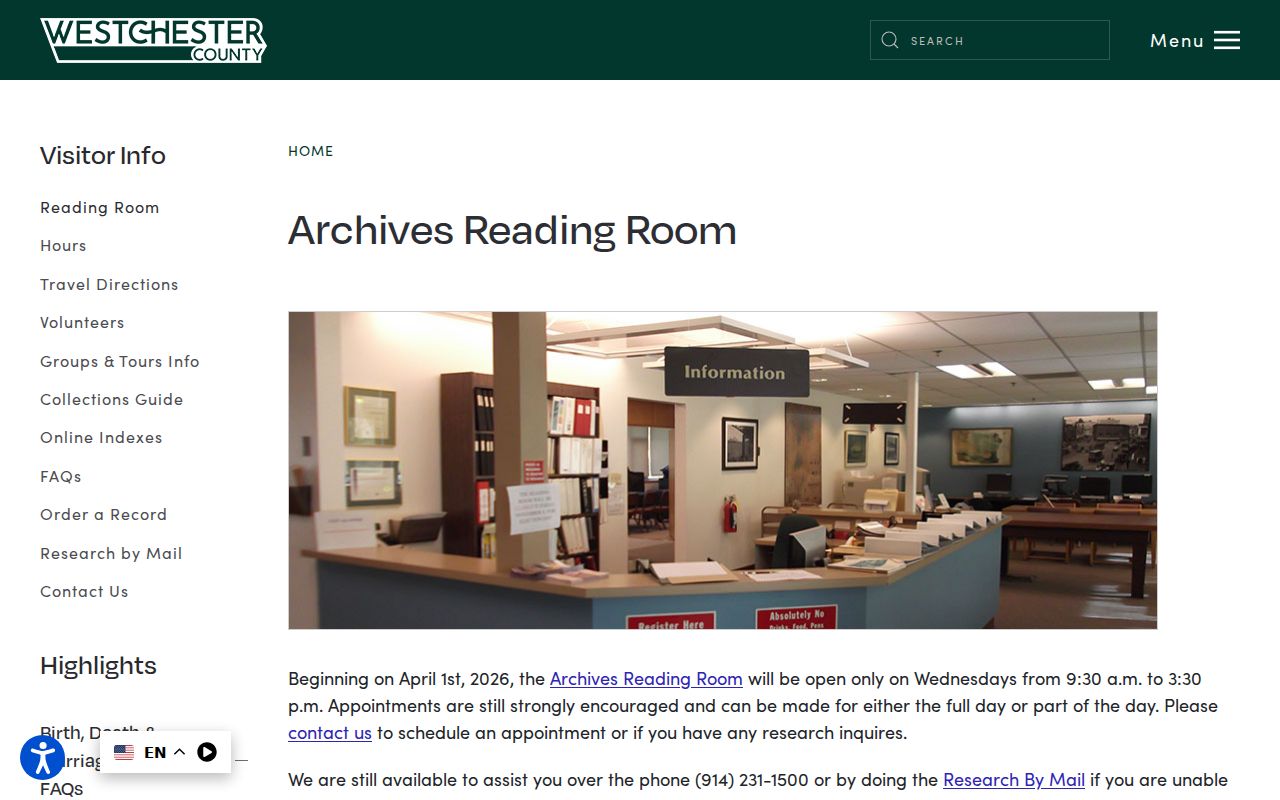
The Westchester County Archives reading room provides the in-person channel at 2199 Saw Mill River Road in Elmsford. Visitors need public ID, use lockers, and request staff-retrieved material, with up to three items per call slip. The listed Tuesday and Wednesday hours are 9:00 a.m. to 4:00 p.m., but hours, retrieval limits, copy charges, and series coverage should be confirmed before travel. Research by mail offers an individual-record request for $15 and custom work at $25 per hour, paid in advance by U.S. check or money order.
The Archives reading-room rules make a focused call-slip list important for Mount Vernon previous residents research.
For mail or reading-room work, give the street address, parcel key, owner variants, year range, record series, and a request for the citation and copy options. Ask staff to distinguish an index result from an image review.
Mount Vernon Address Changes and Variants
Street numbers, suffixes, abbreviations, numbered avenues, apartment designations, and parcel descriptions can change over time. Compare the exact printed form from a deed, directory, map, and current GIS record instead of silently converting each one to a modern address. A map reference may be more useful than a street number in an older instrument, and a parcel can split or merge after a transfer.
No authoritative citywide Mount Vernon street-renumbering or renaming year was located in the reviewed sources. That is a real gap, not a reason to infer one. Test old and new number variants against directories, the 1918 map, deeds, and local-history files. Older material may also say Eastchester, a village label, or another locality description because Mount Vernon was incorporated as a village in 1853 and as a city in 1892.
Mount Vernon Previous Residents on Maps
The Library of Congress 1918 Sanborn set contains 108 digitized images on 107 sheets covering Mount Vernon and nearby Eastchester, Tuckahoe, Bronxville, and Pelham. Use its sheet index to find the block, then compare the footprint, street layout, lot relationship, and mapped use with the address timeline. The map shows the built environment on its date, not a roster of residents.
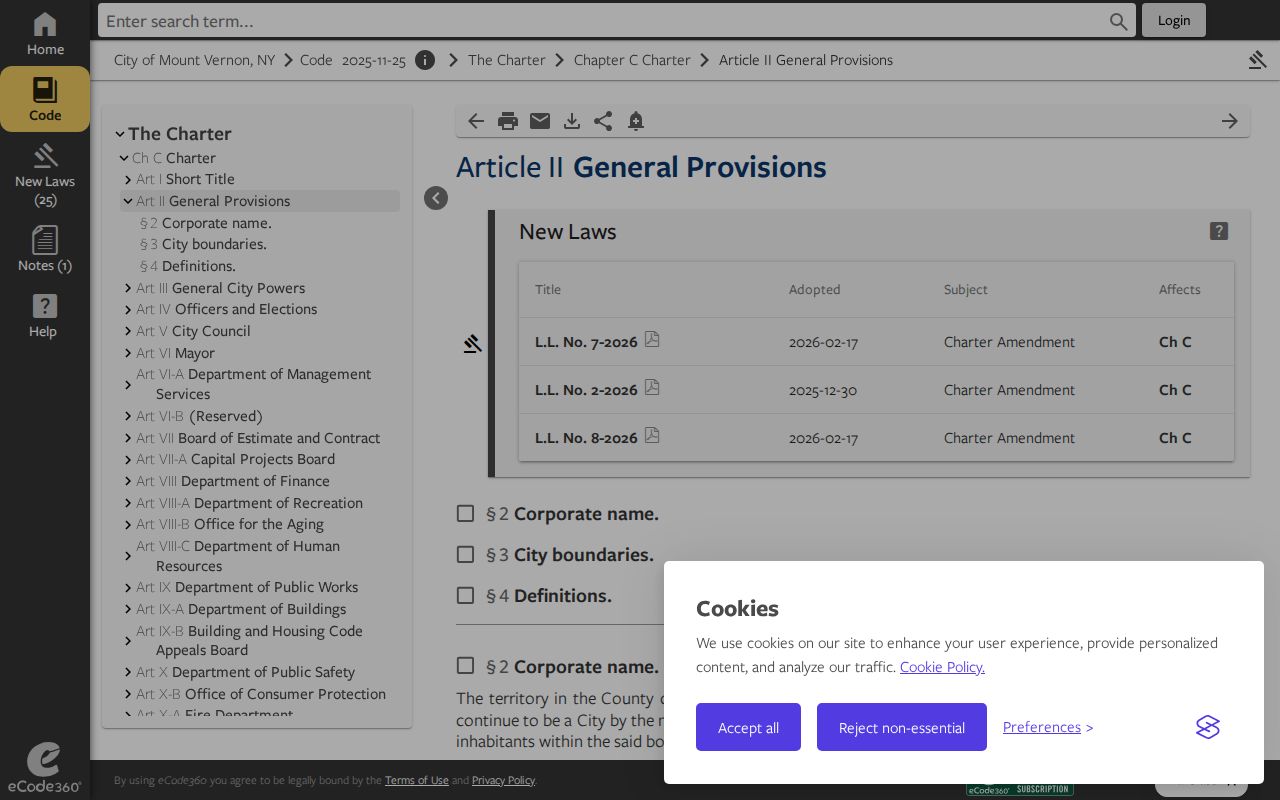
The official Mount Vernon city charter history provides the local jurisdiction context for an older address trail, including the 1892 city charter enacted as Chapter 182 of the Laws of 1892.
A changed footprint can explain why an old address vanishes from a directory, but it cannot identify a person. Pair the map with the dated directory entry, census or newspaper evidence, and the parcel or deed trail before connecting a household to the address.
Mount Vernon Past Households and Obituaries
Ownership is only one layer of a house history. The documented Mount Vernon directory holdings span 1885 through 1937 with gaps, while the State Library identifies regular runs beginning in 1892-93. Those printed listings can place a person or household at an address for a selected publication year. The full collection and entry-reading method belong on the Mount Vernon city directories page; use that material here only to test who lived at the property during a dated period.
Federal census schedules add household composition, age, birthplace, relationship, language, and address context when the year is public under the 72-year rule. They are snapshots on the enumeration date. Names may be misspelled, ages may drift, and the source's locality or street sequence can differ from a later address. Search the street and nearby streets when a surname search does not find the household.
- Choose a directory year close to the property period and copy the name, street number, household notation, section, and page.
- Check the nearest earlier and later available editions, noting any change in number, spelling, household role, or nearby street context.
- Find the public census closest to the sequence and compare its enumeration date, locality, household relationships, and address context.
- Use an obituary, death record, deed, or estate file to test a departure, death, inheritance, or ownership change.
- Keep ownership, printed residence, and census enumeration as separate dated facts in the final timeline.
A person can appear in directories or census schedules without appearing in a deed chain. Conversely, a deed holder may not be the person printed at the property. The distinction is central when tracing past residents rather than merely tracing title.
Mount Vernon Residents at a Trail's End
For a former resident who died at or after leaving an address, the Mount Vernon newspaper microfilm list is a concrete local lead. It identifies Daily Argus, Chronicle, Daily Eagle, and Mount Vernon News holdings with the documented date ranges and gaps. The Westchester County Historical Society adds cemetery volumes, church records, family histories, surname files, census material, photographs, and manuscripts. Use an obituary or cemetery item to test a relationship or date, not to infer a full biography.
Estate material can add another source layer. The County Archives index gateway includes surrogate material, and its searchable surrogate index accepts last name, first name, and year, with results that can provide name, year, town, record type, box, and file number. A probate index is a lead. The underlying file, if accessible, is the record that establishes the document-level relationship.
Mount Vernon Previous Residents and Lawful Use
When an existing city record is not available through the normal property, Clerk, library, or Archives channel, use the Mount Vernon FOIL form for a narrow request. State the record type, parcel or street address, exact date range, custodian, and preferred format. The form allows inspection, paper copies, or electronic delivery if available. The city says requests can take up to 20 business days and longer when extensive. New York FOIL generally requires an agency to grant, deny, or acknowledge a request with an approximate date within five business days under Public Officers Law Article 6.
FOIL opens existing records only. It does not create one, override confidentiality, or establish who lived at an address. Request identified permits or certificates rather than every record about a person or property.
Lawful personal use. Mount Vernon previous-resident research is appropriate for family history, house history, estate questions, civic research, and personal curiosity. Do not use records to follow, intimidate, expose, or harass a living person.