
Mount Vernon City Directory Shelves
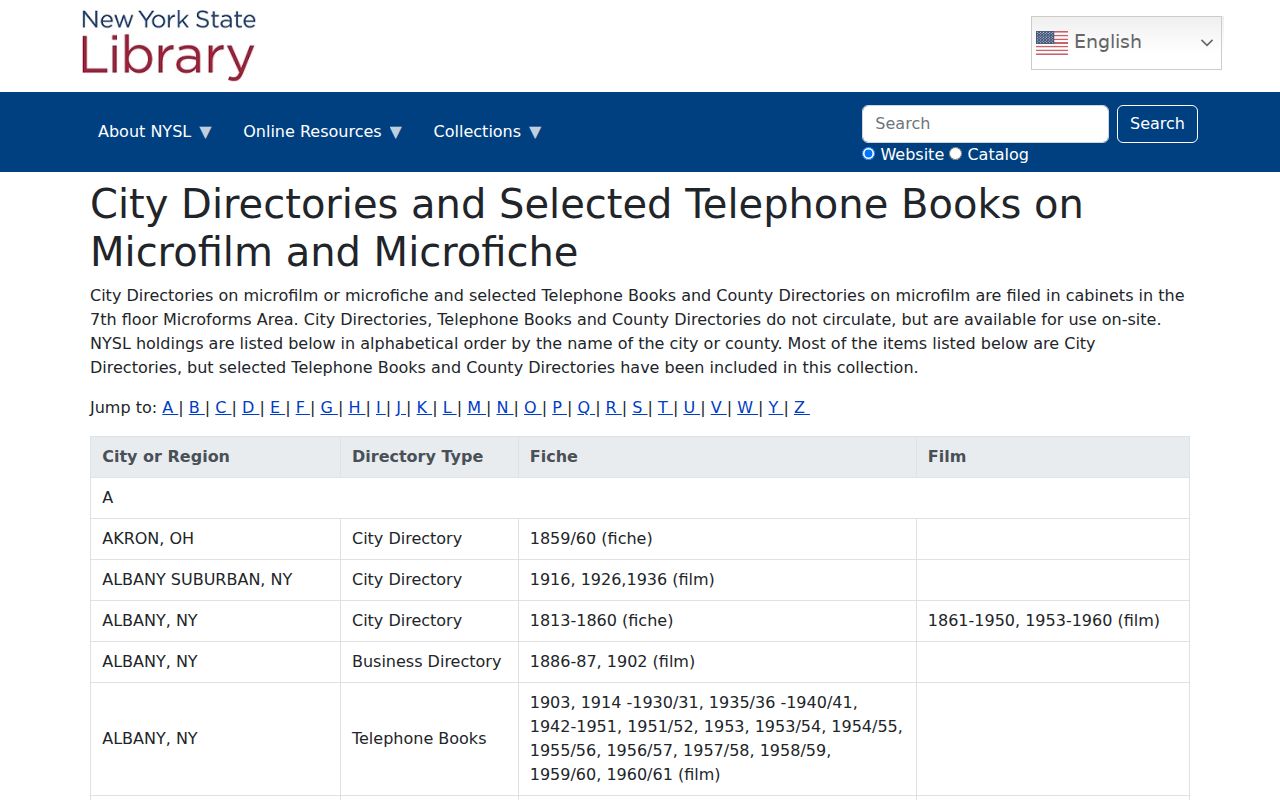
Mount Vernon does not have one continuous, confirmed run of city directories in one place. The strongest published starting point is the New York State Library city-directory collection. Its Westchester evidence identifies regular Mount Vernon runs for 1892-93, 1897-99, 1901, 1903-07, 1909-14, 1916-18, 1920, 1924, 1930-31, and 1937. Those separated runs are useful precisely because the breaks remain visible. A missing year should stay missing in a research log, rather than being supplied from a nearby edition.
Catalog and genealogy evidence adds scattered holdings for 1885, 1887, 1889, 1925-27, 1929-31, and 1937. It also identifies an Allen County Public Library run from 1902 through 1937. The reviewed material does not establish every local shelf call number, publisher, imprint, or final printed edition. Confirm those details from a catalog record or the volume itself before citing them as facts.
| Mount Vernon collection lead | Documented years | Repository or route | How to use it |
|---|---|---|---|
| State Library city-directory holdings | 1892-93; 1897-99; 1901; 1903-07; 1909-14; 1916-18; 1920; 1924; 1930-31; 1937 | New York State Library | Start with the collection page, then verify the volume and page. |
| Cataloged genealogy holdings | 1885, 1887, 1889, 1925-27, 1929-31, 1937 | Catalog evidence and participating libraries | Confirm repository, image status, and edition before relying on it. |
| Allen County Public Library run | 1902-1937 | Allen County Public Library | Use as a collection lead, with catalog verification for a selected year. |
| Local-history room and newspaper microfilm | Directory years vary; newspaper runs begin earlier | Mount Vernon Public Library | Use in person or contact staff for the appropriate volume or film. |
Mount Vernon Directory Research Room
The Virginia McCullen Moskowitz Local History Room is the practical local stop for Mount Vernon directories, local newspapers, and genealogy leads. The Westchester research guide lists it at 28 First Avenue, Mount Vernon, NY 10550, telephone 914-668-1840 ext. 227, with the email address mtvref@wlsmail.org. The Westchester Historical Society library list gives the address as 28 South First Avenue. Call before visiting to confirm the entrance, hours, and the exact volume or microfilm reel needed.
The State Library's city-directory collection page is the best online starting point before asking the local room for a particular year.
Bring a year list, surname variants, and both old and current street spellings. A staff member can help route a request, but the reader should still record the repository, year, page, section, and whether the result is a scan, a catalog entry, or a physical volume. That distinction keeps a later citation usable.
Mount Vernon City Directory Years and Gaps
The more regular State Library sequence begins in 1892-93, the year Mount Vernon became a city. Earlier material may use a different locality label, especially Eastchester or a village description. Search terms should therefore include Mount Vernon and Eastchester, without treating them as automatic equivalents. Preserve the locality exactly as the source prints it, then note the modern interpretation separately.
There is no research support for naming a first printed Mount Vernon directory, identifying every publisher, or declaring a last printed year. There is also no confirmed local reverse or criss-cross title with a publisher and range. Ask the local-history room whether address directories or telephone books are shelved with the city-directory material. That is a better route than assuming an address index existed for every year.
Repository note. Log the year, repository, catalog reference, page, and image status separately. The available evidence identifies runs, not a complete shelf inventory.
What a Mount Vernon Directory Entry Records
Read the full line, not just the surname. For each Mount Vernon city directory entry, copy the printed name, street number, street, directory year, section, and any occupation, business, relative, widow, boarder, institution, or other household notation that appears. Publisher conventions can change from one volume to another. A mark or abbreviation has meaning only when the selected volume provides a key.
| Printed name | Copy the spelling exactly, including initials, suffixes, and variants. |
|---|---|
| Street and number | Record the address as printed, with apartment, floor, or street abbreviation when present. |
| Role or occupation | Use it as a same-name clue when the volume prints it, not as a claim beyond the entry. |
| Household notation | Note a spouse, widow, boarder, relative, institution, or business reference exactly as shown. |
| Volume context | Keep the publication year, section, page, and any abbreviation key with the transcription. |
- Criss-cross directory
- An address-to-occupant arrangement when a directory provides one. A Mount Vernon title and range for this format were not confirmed in the reviewed sources.
- Householder index
- A name-based arrangement used to locate a household entry. Check the selected volume's organization rather than assuming a separate local index exists.
- Abbreviation key
- A publisher's legend for shortened labels. Photograph or transcribe it when the volume includes one, since notation can vary by edition.
Mount Vernon City Directory Address Timelines
An address timeline is the safest way to handle a common name. Use a simple record such as year, printed name, street and number, associated household or business, source, and page. Then compare the prior and following available volumes. Appearance, continuity, and disappearance can show a useful pattern, but one edition can contain a stale listing or an error.
A tax-roll owner field and a directory occupant are different kinds of evidence. The owner may use an off-site mailing address, while a directory entry may name a boarder, business, or another household member. When an older address needs a current parcel context, the Mount Vernon by-street directory is the appropriate place to begin that modern, address-keyed record work.
Mount Vernon Newspapers After Directory Leads
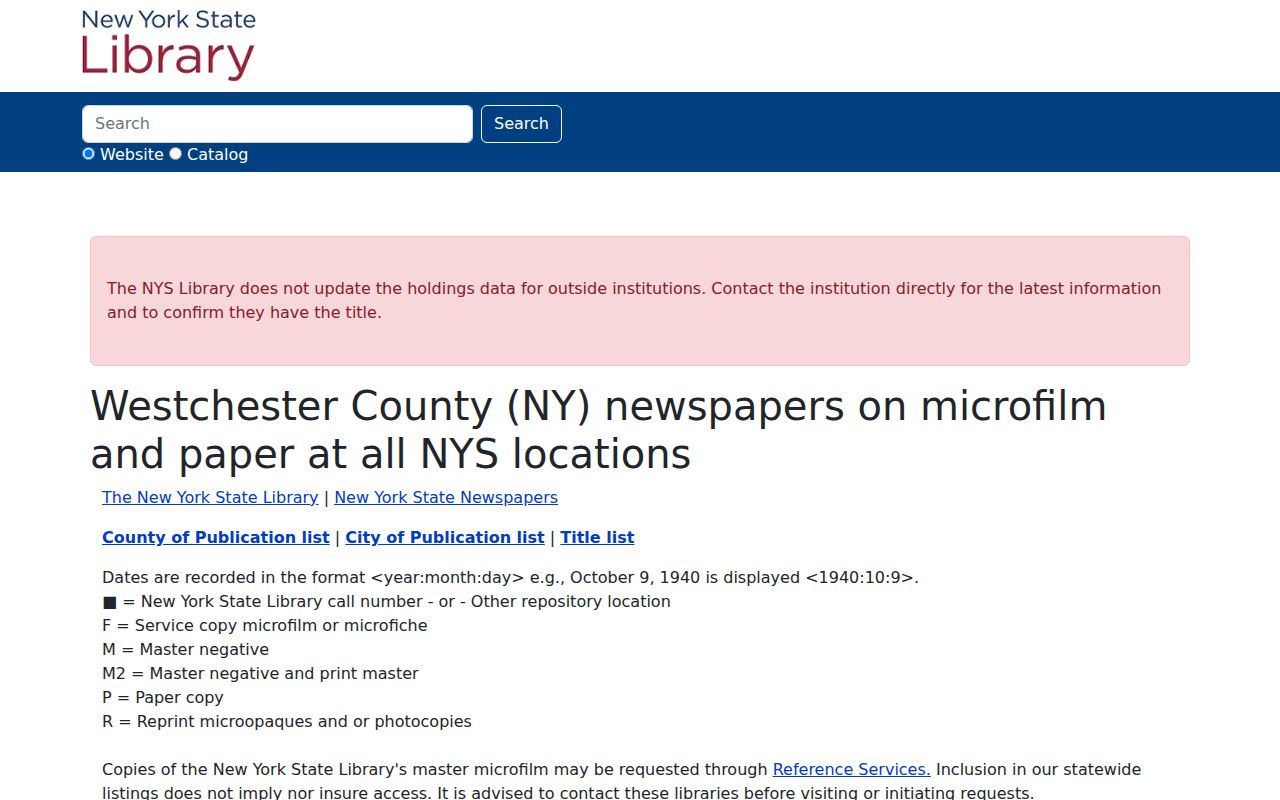
A directory line is often the beginning of a check, not the end. The New York State Library newspaper list identifies Mount Vernon Public Library microfilm for the Daily Argus from 1892 to 1994, with listed gaps; the Chronicle from 1870 to 1898; fragments of the Daily Eagle from 1902 and 1907; and the Mount Vernon News from 1896 to 1900. These are physical-repository leads as well as title-and-date clues.
The State Library newspaper holdings provide a second source for a selected Mount Vernon city directory address or name.
Use a notice for what it actually says and date it. An obituary may identify a spouse or parent, an announcement can add an event date, and an advertisement can connect a name to a business. None of those items automatically proves continuing residence or title to a property.
Mount Vernon Directories and 1918 Sanborn
The Library of Congress 1918 Sanborn map set has 108 digitized images on 107 sheets for Mount Vernon and nearby Eastchester, Tuckahoe, Bronxville, and Pelham. It gives the built setting for an entry: a street layout, lot configuration, and mapped building footprint. The sheet index should be used before choosing a detailed block.
Pair the directory year with the map date carefully. A 1918 sheet does not name every resident, and a directory does not establish a building's construction history. Together, they can help explain why an address disappears, shifts to a different street form, or appears near a church, school, store, or other mapped landmark.
Tracing Mount Vernon Households Across Years
Use consecutive available volumes to test a household, then pair the directory sequence with a census image, deed, vital record, or newspaper item. Federal census schedules are historical snapshots, subject to the 72-year public-release rule. Their names, ages, locality wording, and street sequence can differ from a later directory, so a match should rest on more than one field.
- Start with a directory year close to the known address or family event and copy the entry exactly.
- Check the nearest earlier and later available Mount Vernon editions, recording the address and household notation each time.
- Search the same street and adjoining streets when a surname is absent or the number appears to change.
- Use a census image for the relevant period to test household composition and the enumeration date.
- Use a newspaper, deed, vital record, or cemetery source to test a move, death, relationship, or ownership question.
A disappearance can mean a move, death, an unlisted household, a changed address, or an editorial difference. It is not proof of any one event. Keep the uncertainty in the timeline until a source with a direct date resolves it.
Mount Vernon Directory Repository Fallbacks
When the local shelf does not answer the question, the Westchester County Historical Society collections add family histories, cemetery volumes, church records, newspapers, census material, surname files, photographs, and manuscripts. The Westchester County Archives provides another route for historical maps, deeds, estate material, and local-history records. A currently vacant Mount Vernon city-historian role makes the library, Archives, and Historical Society stronger first contacts than an assumed municipal historian office.
For a deceased former resident, use the library newspaper runs, cemetery sources, Historical Society family material, and the county surrogate index as separate leads. For unconfirmed categories such as yearbooks, a full obituary index, or a local reverse directory, ask the repository what it actually holds. That preserves the difference between a documented collection and a promising lead.