
Finding Mount Vernon Residents From a Starting Point
Mount Vernon has no single public roll that proves every person at every address. The useful records are kept for different jobs. A tax roll is centered on a parcel and its owner field. A deed follows a transaction. A court index follows a case. A printed directory captures what its publisher placed in one edition. That difference matters when a search begins with only a name or an old house number.
Use the strongest identifier first, then add a second one. A street address and tax-map key can lead to the current parcel. A name, a spouse or parent, and an event date can distinguish a historic resident. If the aim is one current person rather than a whole address, the official record paths on the Mount Vernon resident lookup page keep the task narrow.
- Write down the exact address, ZIP code, and approximate date.
- Check the assessment roll and county parcel layer for a tax-map identity, property location, class, and owner field.
- Use Westchester Records Online for a deed or related filing, then follow the record-supported grantor and grantee names.
- For an older household, compare directory editions, local newspapers, and the matching census period.
- Request a defined existing record from the right custodian when the normal source has no public copy.
Note: A name match becomes much stronger when an address, date, parcel, family relationship, or record number agrees in a second independent source.
Mount Vernon Offices Behind Resident Records
Mount Vernon resident records are distributed between city, county, state, court, and library custodians. The city assessor maintains the local assessment route. The Westchester County Clerk operates the land-record gateway. New York runs a controlled voter-status form, while the City Clerk and Registrar direct municipal records. These offices do not publish the same kind of evidence, and none should be treated as a complete residents directory.
Mount Vernon Assessment
City roll and tax-map materials
Parcel-centered owner, value, exemption, class, and location fields
Westchester County Clerk
Land Records Division and county filings
Deeds, mortgages, maps, judgments, and related instruments
Mount Vernon City Clerk
Municipal records management and registrar referrals
Use the office route when a local record has no public index
The address-first record chain belongs in the Mount Vernon street directory, where parcel fields, map geometry, permits, and deed steps can be read in order.
Mount Vernon Parcel Clues and Owner Fields
The public assessment material is often the cleanest first record for a known address. It can show a parcel identifier, property location, current owner name and address, property class, assessed value, exemptions, school district, tax description, parcel size, and roll dates. The county layer complements it with address, ZIP, street-number, street-name, municipal, school, geometry, and tax-map attributes. The parcel key is usually more stable than a casual street-name search.
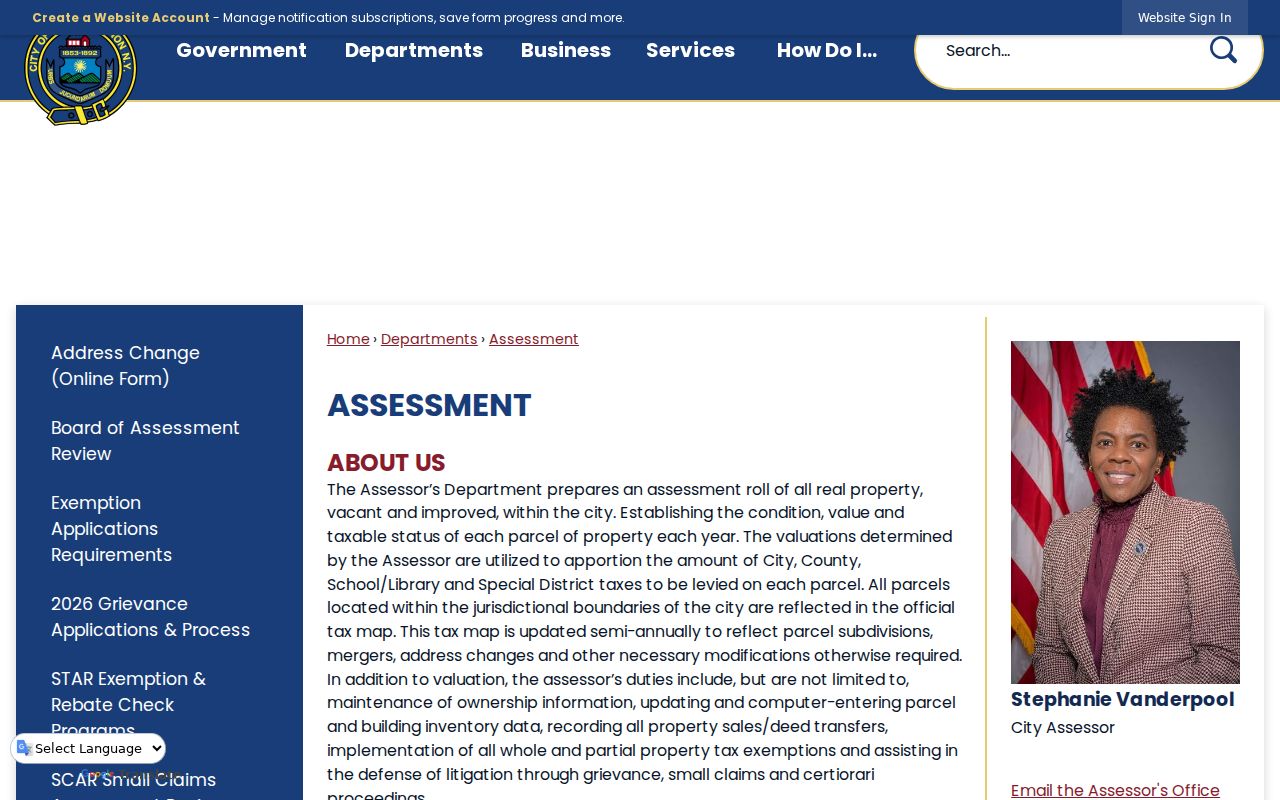
Mount Vernon Assessment is the city entry point for current rolls. The captured assessment screen below illustrates the official route, not a claim about a particular property or household.
Keep the property location and owner mailing address in separate notes. An off-site mailing address, trust, estate, business, or public agency owner does not establish who lives at the parcel.
| Parcel or map field | How it helps a Mount Vernon search |
|---|---|
| PROPADDRESS / LOC_ST_NBR / LOC_STREET | Separates the property address into county-layer street fields. |
| PROPZIP / PROPCITY | Records the postal and locality fields returned with a parcel. |
| SWISSBL | Provides the tax-map print key for later roll and deed work. |
| PROPERTYCLASS / SCHOOL fields | Adds property classification and district context without identifying residents. |
Mount Vernon Voter Status Is a Controlled Check
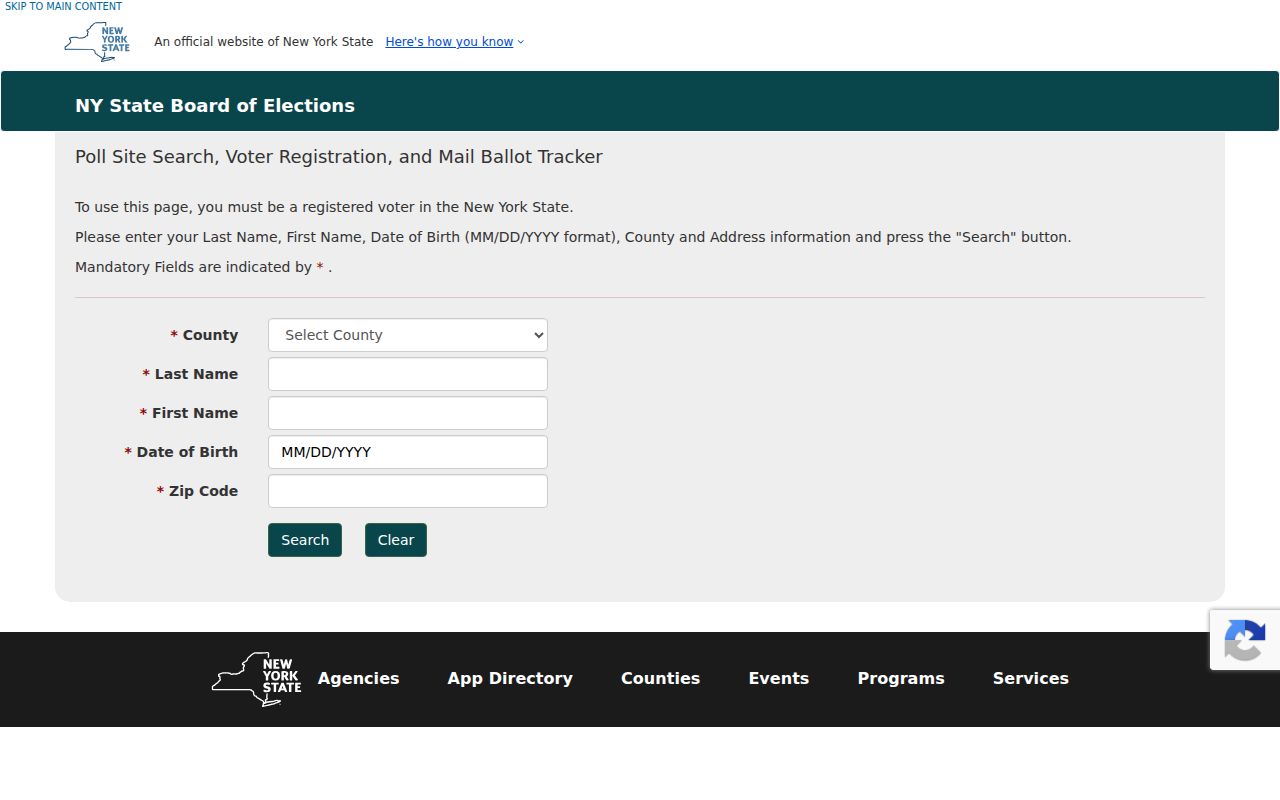
New York’s voter lookup is a status tool, not a name-only list of Mount Vernon residents. The form calls for last name, first name, date of birth in the displayed format, county, address, and ZIP. A failed result can reflect a spelling, date, address, or registration-status mismatch. It is not proof that a person is absent from the city.
The official New York voter lookup shows the controlled fields used for a status check.
Election Law limits public handling of registration data. Section 3-220 protects driver-license, non-driver-ID, and Social Security information, while Section 3-103(5) requires an elections-purpose statement for voter-registration-data requests. A qualifying confidential voter address must remain confidential.
Current Mount Vernon Resident Record Routes
Current sources answer different questions. The most reliable route names the proposition being tested: parcel ownership, an official registration status, a deed party, a court party, a municipal permit, or a public-facing business affiliation. The comparison below makes those limits visible before a result is overread.
| Record route | What it can show | Custodian | Access and limit |
|---|---|---|---|
| Assessment roll | Parcel, owner field, property class, assessment details | Mount Vernon Assessment | Public roll; not a biographical profile |
| Municipal parcel layer | Geometry, property address, ZIP, class, tax-map key | Westchester GIS | Query or identify; boundaries are not surveys |
| Voter status lookup | Controlled registration status and polling details | New York elections | Required fields; not broad browsing |
| Land-record index | Parties to deeds, mortgages, maps, judgments | Westchester County Clerk | Some images require registration |
| License or entity record | Credential, entity status, service-address data | State or county licensing office | Supports affiliation, not residence |
Official records identify a custodian, record series, fields, and date. Commercial profile pages can merge people or repeat stale claims, so treat them only as unverified leads and test any clue against authoritative records.
Mount Vernon Court Search Needs Status Labels
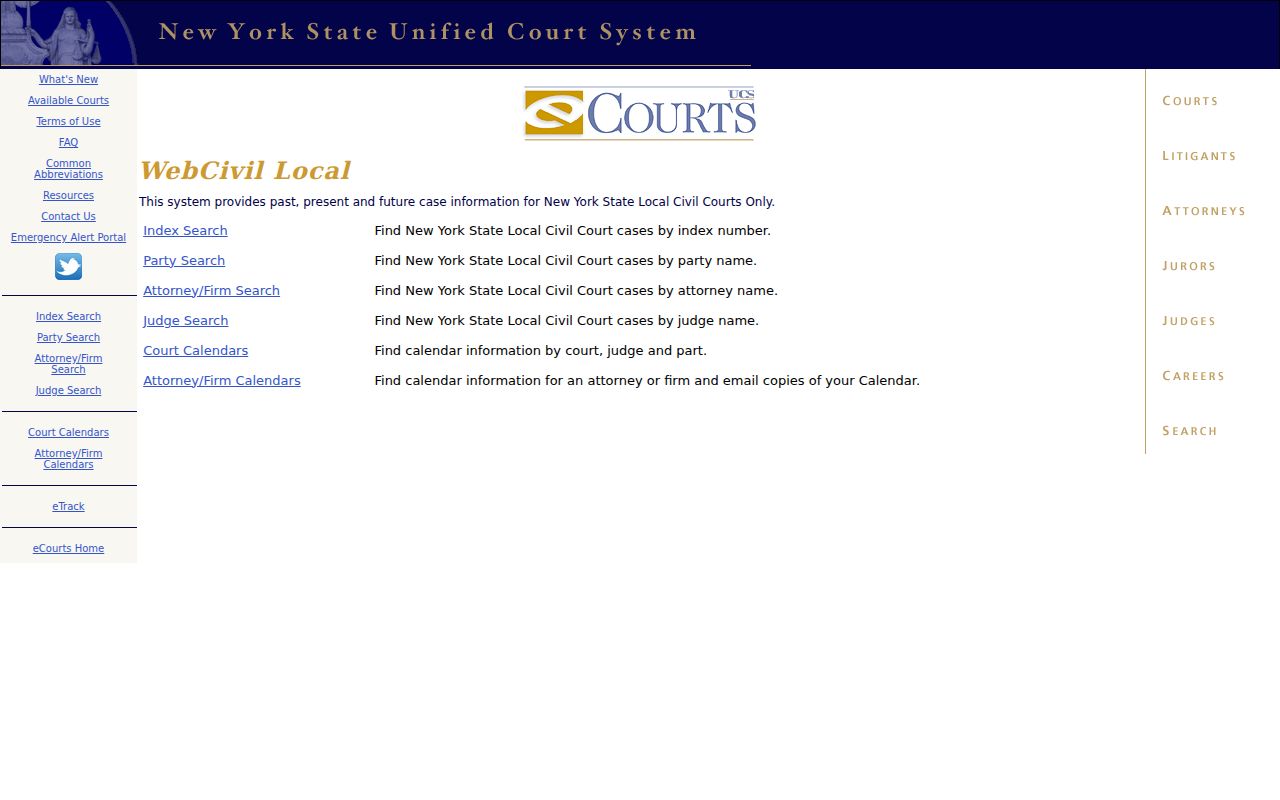
For a court question, start with the court and the narrow fact needed. Mount Vernon City Court handles local civil matters up to $15,000, misdemeanors, felony arraignments, and related local matters. WebCivil Local offers index, party, attorney or firm, judge, calendar, and eTrack routes. Its party form includes fields for party name, court, role, case type, year, status, future appearances, and output selection.
WebCivil Local is the official statewide entry screen for local civil searches.
A party hit establishes an index lead, not identity, conduct, or outcome. Save the court, index number, party role, status, and date. If the index cannot answer the question, contact the clerk through the official court route rather than treating an abbreviated result as the file.
Mount Vernon Vital Records Have Separate Gates
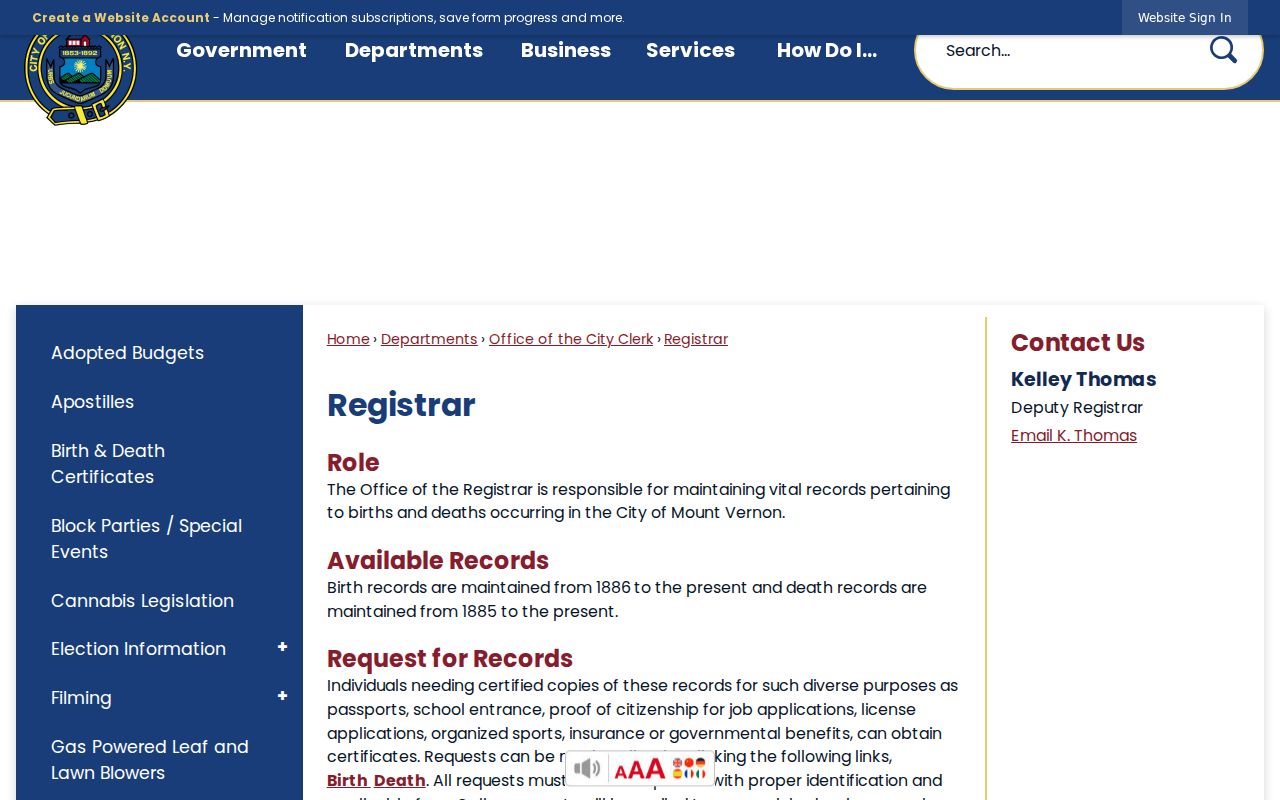
The municipal and state routes use different rules. Mount Vernon’s Registrar reports local births from 1886 onward and deaths from 1885 onward. The city route offers online, mail, and appointment-pickup paths. Certified copies and genealogy copies have different fees and eligibility rules, so the issuing office and request type must be chosen before a request is sent.
The Mount Vernon Registrar page identifies the local route for municipal vital records.
For records outside New York City, the state genealogy route generally uses 75 years for births when the person is known deceased, and 50 years for deaths and marriages when the required death conditions are met. Public Health Law §4174 controls ordinary vital-record access. A vital certificate is not available simply because a related address appears elsewhere.
- Roll
- A dated agency list made for an administrative purpose, such as assessment or elections.
- Index
- A finding aid that points to a record but may not include its image or certified copy.
- Parcel
- A mapped tax or land unit that can remain useful when an address changes.
- Criss-cross directory
- A historical directory arranged by address so research can move from a house number toward a listed household.
Mount Vernon FOIL Requests Work Best When Narrow
FOIL is the fallback for existing city or county records that are not available through the normal portal, counter, library, or archive. The most useful request gives the custodian a record type, date range, address or parcel key, and preferred format. The city online form asks for contact details, a record narrative, document or date details, and whether the requester wants inspection, paper copies, or electronic copies if available.
The Mount Vernon online FOIL form displays the city request choices.
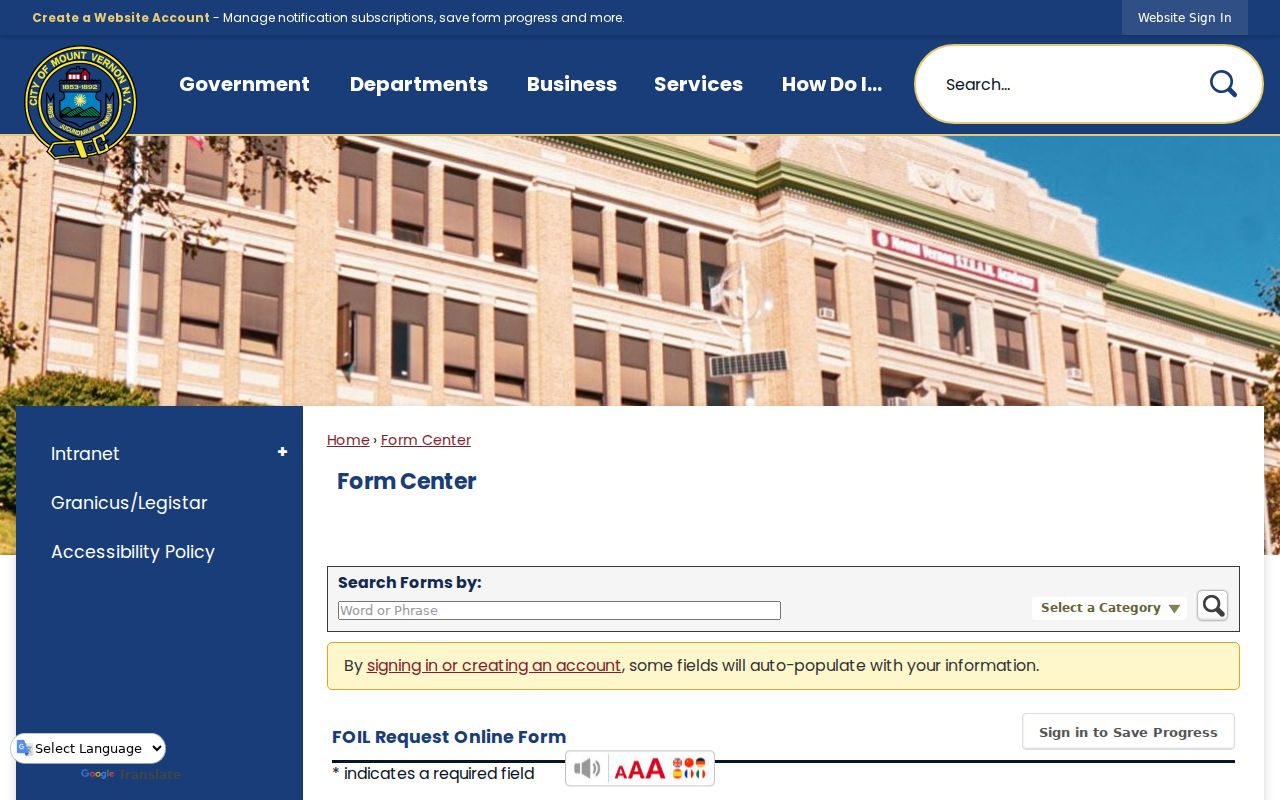
New York Public Officers Law Article 6 generally requires an agency to grant access, deny access, or acknowledge a request with an approximate date within five business days. The city says a request can take up to 20 business days and longer for extensive work. FOIL does not override court, election, vital-record, sealed, or confidential-address restrictions.
Mount Vernon Historical Directory Trails
Historic residents are best approached as a timeline. Cataloged Mount Vernon directory holdings reach 1885, 1887, and 1889, while New York State Library material includes more regular runs beginning in 1892-93 and continuing in separated runs through 1937. One edition can be stale or incomplete. Three consecutive editions can show an appearance, continuity, name variation, or disappearance that deserves a second source.
The New York State Library city-directory collection is a key route for locating historic volumes.
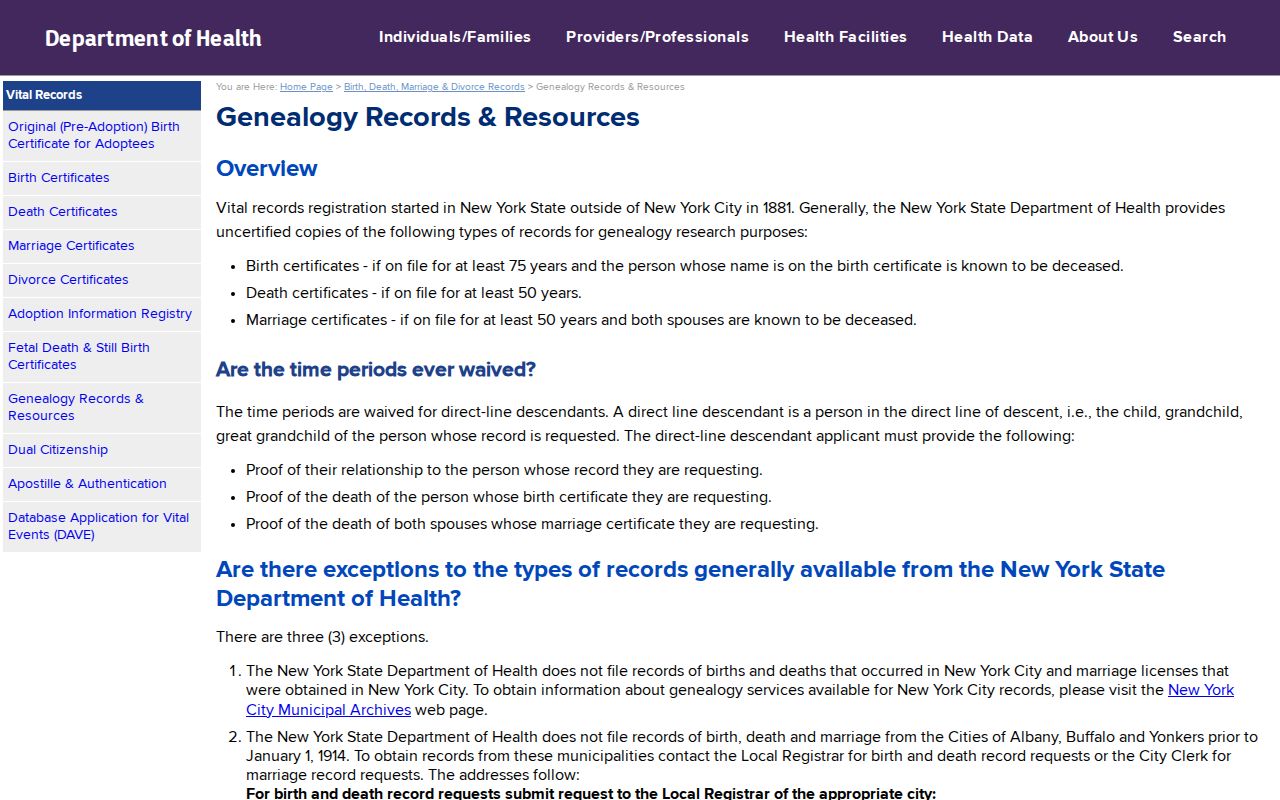
The state genealogy screen is a reminder that a directory line and vital record answer different questions. Pair a printed address with a directory year, event date, census image when available, or authorized genealogy request. Do not infer a relationship or continuous residence from one entry.
Mount Vernon Names Before City Incorporation
Mount Vernon was incorporated as a village in 1853 and became a city in 1892. Older property and family material can therefore use Eastchester, a village label, a county locality, or another historical description instead of the modern city name. Record the original locality wording, then separately note the modern interpretation. Quietly converting every old reference to Mount Vernon can hide the path needed for the next record.
The historical trail is older than the city. Westchester Archives lists grantor and grantee deed indexes from 1680 through 1907, mortgage indexes from 1680 through 1897, maps from about 1766, and estate material from 1782. The repository may be the better channel when WRO’s online range or image access does not reach the needed period.
Westchester Archives research by mail explains an alternative when an in-person visit is not practical.
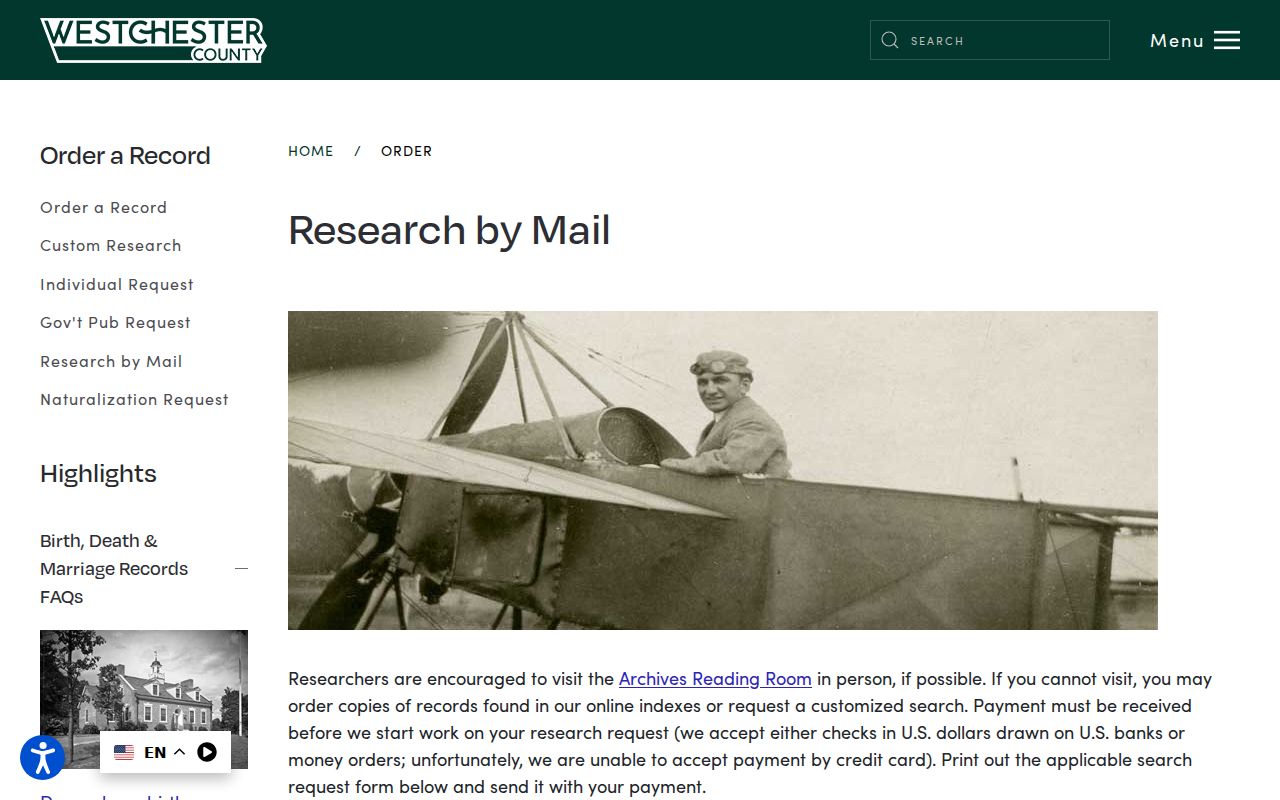
Archive requests work best with a surname variant, record series, date span, and locality. Ask first for an index or citation, then request the underlying item if the index identifies a plausible record.
Mount Vernon Neighborhood Context Without Rosters
Neighborhood names help with orientation but do not draw legal boundaries or prove membership. Fleetwood’s association publishes community information, contact, membership, and mailing-list routes without releasing a roster. Oakwood Heights has a public association history and links to local organizations, but its public material does not establish the full boundary of a neighborhood or the people connected to an address.
Use the county parcel map for actual adjacency, then describe the result as an adjacent parcel, same block, street segment, or association area. The map’s geometry is useful for research, but the county disclaimer means it is not a survey. The Mount Vernon neighbors page keeps that block-level method separate from a citywide search.
Note: Public community pages can identify a civic contact and local vocabulary, but they do not authorize a member list or a claim that a resident belongs to an association.
Mount Vernon Records Are Still Being Digitized
Current access routes can change because the city is still moving records into newer systems. An August 2025 city agenda item said City Clerk staff would attend a Laserfiche workshop and described digitized vital records. That does not establish that every image or index is publicly searchable. Eligibility rules and the public request route still control access.
The 2025 State of the City report said the Buildings Department was funding hard-file digitization and expected an OpenGov upload timeline of up to 18 months. That helps explain why a current portal may show one category while older permits or plans still require a city search. Verify a present fee, office detail, or portal option with the custodian before relying on it.
The City Clerk office page remains a useful current route for municipal records management and referrals.
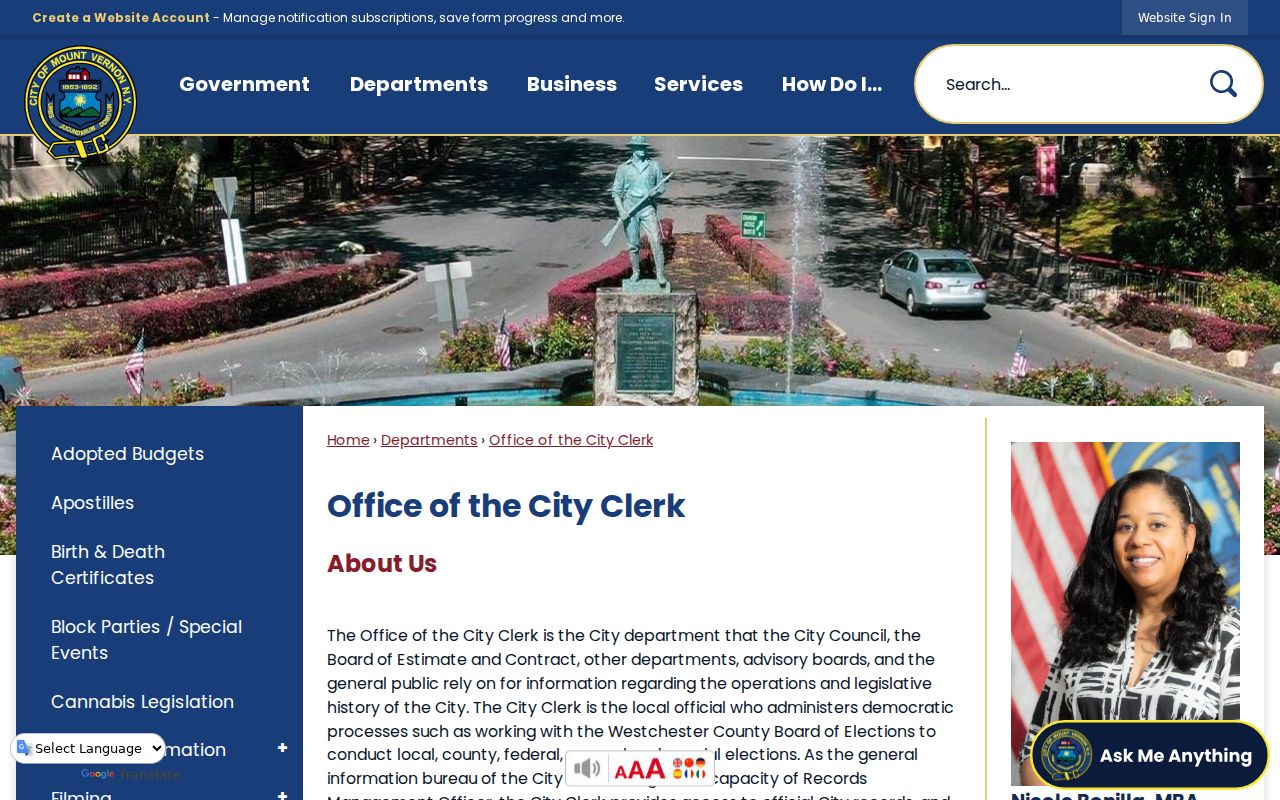
The official city page is useful for confirming the current route when a search crosses municipal records, vital records, licenses, or a narrowly defined FOIL request.